
Navigating life after an injury, surgery, or during a progressive condition often brings new challenges to simple daily actions. Standing up from a chair, getting out of bed, or moving to the bathroom can transform from an automatic motion to a daunting ordeal. For countless individuals who retain some lower body strength but lack the stability or endurance to stand independently, the solution lies not in a wheelchair, but in a device specifically designed to bridge the gap between sitting and standing. Enter the sit to stand lift for home use—a piece of equipment that is fundamentally changing how care is delivered within private residences. Unlike a full-body sling lift, this device is engineered for a specific purpose: to assist individuals who can bear weight on their legs and actively participate in the transfer. This is not just about moving a person; it is about preserving dignity, encouraging rehabilitation, and redefining the boundaries of a living space.
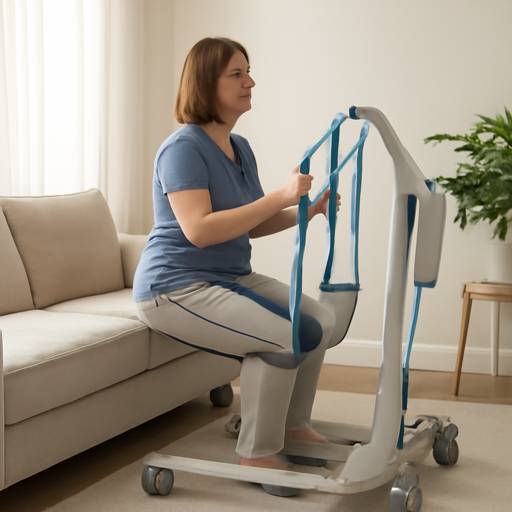
Understanding the mechanics of these lifts is the first step toward reclaiming personal autonomy. The core philosophy behind a sit-to-stand lift is active participation. The user must be able to place their feet flat on the footplate, bend their knees, and support a portion of their body weight. The lift then provides the necessary boost to overcome gravity, guiding the user from a seated to a standing position. This active involvement distinguishes these devices from passive patient lifts, making them a cornerstone of physical therapy and daily mobility routines. The psychological benefit here is profound. Instead of being a passive recipient of care, the user is an active participant in their own movement. This engagement helps maintain muscle tone, improves circulation, and fosters a sense of control that is often lost when mobility declines. For caregivers, the benefit is equally significant. A sit-to-stand lift dramatically reduces the biomechanical strain associated with manual lifting, which is a leading cause of injury for home health aides and family members. The lift converts a high-risk, two-person maneuver into a safe, one-person operation.
When selecting equipment for a private home, the environment is just as crucial as the patient’s physical condition. The versatility of these lifts allows them to function seamlessly in a variety of household settings, from a narrow bathroom doorway to a living room corner. Most units are designed with a compact base and locking casters that provide stability without sacrificing maneuverability. The ability to pivot the user directly over a toilet or a bedside chair eliminates the need for complex repositioning. This fluidity is the difference between a cumbersome medical appliance and a genuine mobility aid. Furthermore, the design intent is to normalize the act of standing, preventing secondary complications such as skin breakdown from prolonged sitting or respiratory issues from poor posture. For many, this device becomes the bridge that keeps the bedroom, bathroom, and living room within reach, effectively pushing the horizon of home life outward again.
How a Sit to Stand Lift Transforms Daily Caregiving and Safety
The introduction of a sit-to-stand lift into a home environment does more than just move a person from point A to point B; it fundamentally restructures the caregiving dynamic. Without mechanical assistance, a caregiver performing a stand pivot transfer must withstand significant twisting and lifting forces. Over time, this repetitive strain leads to cumulative trauma disorders and back injuries. By implementing a sit to stand lift for home use, the physical burden is transferred from the caregiver’s spine to the machine’s hydraulic or electric motor. This shift allows the caregiver to focus on providing guidance and confidence rather than brute strength. The lift provides a controlled, stable trajectory, eliminating the jerky, unpredictable movements that often lead to falls during manual transfers. This safety net is particularly critical during middle-of-the-night transfers when fatigue compromises both the patient’s and the caregiver’s reflexes.
Safety is not simply about preventing caregiver injury; it is about the patient’s security. A fall during a transfer is a catastrophic event for someone with compromised bone density or recovering from hip surgery. The sit-to-stand lift mitigates this risk by providing a rigid frame for the user to hold onto and a knee pad that locks the lower body into a safe position. The lifting mechanism is designed to operate slowly and smoothly, preventing the sensation of being jerked or dropped. Consistent, controlled movement builds trust between the user and the equipment, which in turn reduces anxiety and muscle tension, making the transfer easier for everyone involved. The most sophisticated units feature emergency stop buttons and backup manual cranks, ensuring that even in a power failure, the patient is never left suspended or in an unsafe position. For a family caring for a loved one at home, this reliability is priceless. It transforms a space of anxiety into a space of capability.
The hygiene and toileting benefits of this lift are often understated but are vital for quality of life. Traditional methods of toileting a bed-bound or partially mobile individual often involve awkward positioning, bedpans, or commode chairs that are difficult to clean. A sit-to-stand lift allows for direct, over-the-toilet transfers. This preserves the user’s ability to use a standard toilet, maintaining a sense of normalcy and privacy. The slings used are typically open in the perineal area, allowing for elimination without removing the sling, which streamlines the process and reduces the risk of contamination. For the caregiver, cleaning the toilet is far simpler than cleaning a specialized commode bucket or dealing with incontinence pads. This integration into the standard bathroom routine is a major victory for dignity. It means the bathroom remains a private space for a personal function, not a location for a medical procedure. The lift effectively defends the user’s routine against the intrusion of disability, preserving as much normalcy as the condition allows.
Key Features and Selection Criteria for a Home Environment
Choosing the right lift for a private home requires a detailed assessment of the user’s physical abilities, the home’s architecture, and the daily routine. One of the primary distinctions in the market is between manual and electric models. A manual lift uses a hydraulic pump to raise the patient, making it lighter and less expensive, but it requires the caregiver to supply the pumping force. An electric lift operates on a rechargeable battery, offering smooth, effortless operation that requires minimal caregiver exertion. For home use, electric models are generally preferred because they allow the patient to self-operate with a hand control, fostering independence. When selecting a unit, the weight capacity is non-negotiable. The lift must be rated for the patient’s current weight, with a safety margin. Overloading a lift not only voids the warranty but poses a serious safety hazard. Equally critical is the base opening width. The lift must be able to straddle a standard toilet, wheelchair, or armchair. Some models feature a wider base for stability, while others offer a narrower option for navigating tight hallways.
The sling design is arguably the most important interface between the user and the machine. A poor-fitting sling can cause discomfort, skin shearing, and instability. For a sit-to-stand lift, the sling typically wraps behind the user’s back and under the arms, or it may be a vest-style design that clips at the shoulders. The material is also a factor. Mesh slings are breathable and dry quickly, making them ideal for hygiene and bathing situations. Padded slings offer extra comfort for longer periods of sitting or for users with sensitive skin. The connection method between the sling and the lift arms must be secure and easy for the caregiver to attach. Quick-release clips or loop straps that color-code for size are common features that reduce set-up time. It is also wise to consider having multiple slings so one can be laundered while the other is in use. The knee pad is another often-overlooked component. It must be positioned correctly against the user’s knees to prevent slipping and provide the necessary counterbalance for the standing motion. A well-designed knee pad is contoured and padded for comfort, as the user will be applying pressure against it during the lift.
Practical considerations for the home space cannot be ignored. Many living rooms and bedrooms have carpeting. While most lifts have locking casters, maneuvering a heavy lift on deep pile carpet can be difficult. Hard plastic casters slide more easily on tile or wood but may require a floor mat on carpet to reduce friction. Battery life is another critical factor for electric lifts. A daily charge is typically sufficient for multiple transfers, but the user should establish a habit of returning the lift to its charging station after each use. The footprint of the lift when stored is also relevant. Some units fold flat for storage under a bed or in a closet, while others occupy a permanent corner space. Evaluating the home’s floor plan for turning radius and door widths will prevent the frustration of purchasing a lift that cannot reach the patient’s bedroom. Many suppliers offer home assessments or detailed specifications for this purpose. Ultimately, the best lift is the one that fits the user, the caregiver, and the house, creating a seamless part of the daily flow rather than an obstacle.
Real-World Integration: Mobility Milestones and Caregiver Relief
Consider the case of Martha, a 78-year-old woman recovering from total knee replacement surgery. Her home is a single-story ranch, but the recovery period required her to avoid weight-bearing on the surgical leg for several weeks. Without a lift, her husband, Robert, would have been required to support nearly all of her weight during transfers from the recliner to the restroom. This was an untenable scenario given his own back history. The introduction of a sit-to-stand lift completely changed their recovery trajectory. Martha was able to begin standing immediately, putting the prescribed amount of weight on her good leg while the lift supported the surgical leg. This early mobilization was critical for preventing blood clots and maintaining quadriceps strength. Robert’s role shifted from a physical lifter to a safety spotter. The anxiety in their home dissolved once a consistent, safe transfer routine was established. Martha reported that the independence of being able to stand on her own, with the lift’s guidance, was a major psychological boost that accelerated her motivation for physical therapy.
Another compelling example involves a middle-aged man named David diagnosed with Multiple Sclerosis (MS). In the early stages, his ability to stand fluctuated daily. Some days he was strong; other days, fatigue made standing from a low sofa nearly impossible. A manual stand-pivot transfer was unpredictable and dangerous. By incorporating a sit-to-stand lift into his home, David regained the ability to use his bathroom safely regardless of how he felt that morning. He could position the device himself and activate the lift, giving him control over his body even when his muscles failed him. This device became his insurance policy against his own unpredictable symptoms. For his wife, it meant she could leave him alone for an hour without fear that he would attempt a risky transfer and fall. The lift provided a margin of safety that allowed both partners to maintain their separate routines and well-being. This is the ultimate goal of home-use mobility equipment: to support the person, not just manage the disability.
From a caregiver training perspective, the sit-to-stand lift simplifies the complex mechanics of body mechanics training. Rather than teaching a relative a risky two-person lift or a difficult pivot technique, a home health aide can train a family member on lift operation in under an hour. The training focuses on positioning the base, securing the sling, and using the controls. There is no need to master the physics of a manual transfer. This lowers the barrier to entry for family caregivers who are often older themselves and may have their own physical limitations. The lift enables them to provide high-quality, safe care for a longer period, delaying or eliminating the need for a skilled nursing facility. The anecdotal evidence from physical therapists is clear: homes equipped with the correct sit-to-stand device see fewer re-admissions for fall-related injuries and a higher rate of functional improvement in patients. The device becomes a cornerstone of the home healthcare plan, extending the viability of independent living. It transforms a living room from a location of risk into a location of rehabilitation and dignity, proving that with the right tool, home is truly where the healing happens.