
For many individuals recovering from surgery, managing a chronic condition, or navigating the natural challenges of aging, the simple act of standing up from a seated position becomes a monumental task. This motion, which most people perform without a second thought, engages core strength, leg power, and balance—all of which can be compromised. In a home environment, the loss of this ability does not just limit physical freedom; it reshapes daily life, creating a reliance on family members or caregivers for every transfer. A sit to stand lift for home use is engineered to bridge this gap, providing a mechanical solution that respects the user’s remaining strength while eliminating the hazardous strain placed on caregivers. Unlike full-body sling lifts that require complete passivity from the patient, these devices work in concert with the individual. The user must be able to bear some weight through their legs and maintain trunk stability. This active participation is crucial, as it preserves muscle tone and confidence, preventing the rapid deconditioning that often accompanies prolonged immobility. By focusing on the sit-to-stand motion specifically, these lifts address one of the most frequent and high-risk transfer points in any home: moving from bed to wheelchair, from chair to commode, or from sofa to standing.
The decision to introduce a lift into a domestic setting often follows a significant event—a hip replacement, a stroke, or the progression of a neuromuscular disease. The advantages of a sit-to-stand system over a manual or a full-lift system are profound in these scenarios. Firstly, the user retains a sense of agency. The lift does not do everything; it assists. This psychological component, the feeling of "helping" oneself, can accelerate rehabilitation and improve overall morale. Secondly, the footprint of these devices is generally smaller and more maneuverable than a full-body lift, making them easier to navigate through doorways and around furniture in a typical home layout. Thirdly, for the caregiver, the biomechanical benefit is immediate. Bending, twisting, and supporting a dead weight are the primary causes of back injuries in home care. A sit-to-stand lift redirects the load through the device’s frame, allowing one person to safely manage a transfer that would otherwise require two or more. This transforms the caregiving dynamic from a physically punishing chore into a guided, supported process.
Understanding the Mechanism and Indications for Safe Home Use
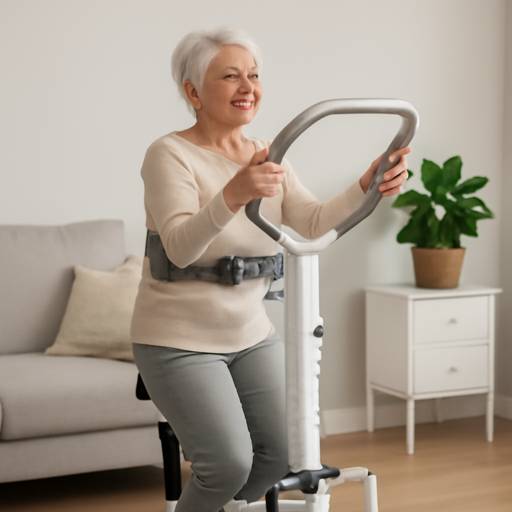
A sit-to-stand lift operates on a relatively straightforward principle: it uses a padded leg support to stabilize the knees and a sling or harness that wraps around the user’s back and under the arms. The device is positioned in front of the user, who is seated on the edge of the bed or chair. As the lift is activated, it slowly raises the user into a standing position. The key distinction from a total lift lies in the sling design. A sit-to-stand sling is open at the bottom, leaving the user’s legs free to bear weight. The lift provides the upward momentum and stability, while the user provides the leg drive. This mechanism is highly effective, but it is not universal. For a sit to stand lift for home use to be appropriate, the patient must meet specific criteria: they must have some weight-bearing capability through both legs, adequate trunk control to sit upright without collapsing forward, and the cognitive ability to understand the process and follow simple commands. Those with severe lower extremity fractures, complete paralysis of the legs, or significant hip contractures are not candidates for this type of lift. A full-body sling lift would be required in those cases.
Proper patient assessment is the single most critical step before renting or purchasing a sit-to-stand lift for home use. This assessment is typically performed by a physical or occupational therapist. They evaluate not only the patient’s physical strength but also their range of motion, pain levels, and ability to cooperate. The therapist will also survey the home environment. Do the doorways allow the base of the lift to pass through? Is the flooring carpet or tile? Where will the lift be stored when not in use? These logistical questions are just as important as the medical ones. For instance, a wider base provides more stability but may not fit through a standard 32-inch doorway. Many modern home-use lifts have a "spreadable" base that narrows for travel and widens for stability during the lift. The sling is another area of careful consideration. It must be the correct size to support the patient comfortably under the arms and across the back without chafing or cutting into the skin. Choosing the wrong sling, or placing it incorrectly, is the most common setup error that leads to discomfort and fall risk. Caregivers must be trained not only on how to attach the sling but also on how to monitor the patient’s skin condition after each transfer.
The practical operation of a home-use lift is designed to be intuitive, but it demands consistent attention to safety protocols. The base must always be fully spread and locked before raising the patient. The sling loops must be properly connected to the spreader bar, and the patient’s feet should be flat on the floor or on a non-slip mat. The lift should be activated smoothly and at a moderate speed. Never leave a patient unattended in the lift, even for a moment. The entire transfer, from seated to standing and back to seated at the destination, should be a continuous, controlled motion. The goal is to make the process feel natural and secure for the user, reducing anxiety. Many users initially fear being "dangled" or tipped forward. A well-operated lift, with the patient’s knees braced and their body leaning slightly forward into the motion, actually mimics the natural standing pattern. Over time, with consistent use, the lift becomes a non-threatening tool that allows the user to access different parts of the house—moving from the bedroom to the living room to the bathroom—without exhausting the caregiver or risking a fall. This restores a sense of normalcy to the home, where the device eventually blends into the background of daily life.
The Impact on Caregivers: Preventing Injury and Reducing Burnout
One of the most underappreciated aspects of home healthcare is the physical toll it takes on unpaid family caregivers. Spouses, adult children, and even neighbors often find themselves suddenly responsible for moving a person who cannot stand independently. Without proper equipment, the caregiver relies on a technique called the "lift with your legs" method, which is nearly impossible to execute correctly during an unexpected or uncooperative transfer. The reality is that manual lifting of a patient, even for a partial stand, places compressive and shear forces on the lumbar spine that far exceed safe occupational limits. Caregiver back injury is one of the leading reasons for patients being transitioned from home care to skilled nursing facilities. A sit-to-stand lift effectively removes these mechanical risks. Instead of supporting the patient’s weight with their own spine, the caregiver simply guides the patient into position and operates the controls. This single change can be transformative for the long-term viability of home care.
Beyond the physical safety, there is a significant emotional and relational benefit. The dynamic of a caregiver acting as a "human lift" often breeds resentment, frustration, and guilt on both sides. The patient feels like a burden; the caregiver feels overwhelmed and exhausted. Introducing a sit to stand lift for home use reframes the interaction. The caregiver transforms from a manual laborer into a coach and safety monitor. The transfer becomes a collaborative activity where the machine does the heavy work, and both parties focus on communication and stability. This shift can preserve the underlying relationship—whether it is a spouse, a parent, or a child. The caregiver is no longer associated with the pain of being pulled upright or the fear of being dropped. Instead, they are the person who provides the harness, checks the knee pad, and presses the button for a smooth, pain-free ride. This psychological lift is often as important as the mechanical one. It reduces the caregiver’s stress levels, lowers the risk of burnout, and makes it more likely that the patient can remain in their home for a longer period. The equipment pays for itself many times over when it prevents a single hospital visit for a caregiver’s herniated disc or a patient’s fall-related fracture.
Training is a non-negotiable component of caregiver adoption. A lift sitting in a corner because no one is confident using it is worthless. Most reputable durable medical equipment (DME) providers offer in-home training as part of the delivery. This session should cover not just the mechanics but also emergency procedures. What happens if the lift loses power mid-transfer? (Most have a manual descent valve.) What if the patient becomes anxious and tries to grab the caregiver? These scenarios must be practiced. A confident caregiver is a safe caregiver. Furthermore, caregivers must learn to listen to the patient’s body language. A grimace or a sudden stiffening of the legs can indicate the sling is pinching or the knee pad is too low. Over time, the caregiver becomes attuned to the machine’s sounds and the patient’s signals, turning a clinical procedure into a seamless part of the daily routine. The goal is to make the use of the lift so natural that it requires no conscious thought, just as standing up once did. This level of integration is what allows the home to feel like a home again, rather than a care facility.
Real-World Examples: How the Lift Changes Daily Life
Consider the case of Margaret, a 78-year-old woman recovering from a total knee replacement. Prior to surgery, she was independent. Post-surgery, she could not bear full weight on her new joint and was terrified of falling when trying to get up from the low sofa in her living room. Her daughter, a schoolteacher, was helping her during recovery but was struggling with lower back pain from supporting her mother. A sit-to-stand lift was introduced for a six-week rental. Within three days, Margaret’s confidence soared. She could get up to use the bathroom without anxiety. Her daughter’s back pain vanished because she no longer had to physically haul her mother upright. The lift allowed Margaret to participate in her own recovery, standing with assistance multiple times a day to build strength. By the time the rental ended, she was walking with a cane and did not need the lift. The device served as a critical bridge to full independence, preventing a prolonged bed rest scenario that would have weakened her muscles further.
Another example involves Tom, a 65-year-old man with advanced multiple sclerosis. Tom could stand briefly if he was braced, but he lacked the stamina and balance to walk or transfer safely. His wife, Carol, was his primary caregiver. For years, she used a manual technique, but as Tom’s condition progressed, the risk of a fall during transfers increased dramatically. They switched to a sit to stand lift for home use to manage daily transfers from his power wheelchair to the toilet and to his recliner. The impact on Carol was immediate. She no longer dreaded the morning routine. The lift gave her the ability to transfer Tom safely without risking a fall that could injury him or her. For Tom, the lift was a lifeline to dignity. He could still use his legs to push, remaining engaged in the process. The lift allowed him to continue living at home, where he wanted to be, for an additional three years beyond what his neurologist had predicted was possible. The cost of the lift was a fraction of the cost of even a single month in a nursing home, making it a financially sound decision as well as a humane one.
A third scenario highlights the importance of caregiver training. A family purchased a sit-to-stand lift for their father, who had suffered a stroke. The father had partial weight-bearing on his left side. Initially, the family did not receive proper training. They placed the knee pad too high and the sling too loosely, causing the father to slip during a transfer. Fortunately, he was caught before a fall occurred, but the incident created severe anxiety for everyone. They called in a home health aide who re-trained them on correct positioning: feet flat, knees slightly bent against the pad, sling snug under the armpits, and the patient leaning slightly forward into the motion. Within a week, the father was performing the transfers with a smile, and the family was using the lift multiple times a day without incident. This case underscores that the device is only as good as the knowledge of the user. Proper setup and practice are not optional; they are essential for safety. When used correctly, the sit-to-stand lift is a powerful tool that restores mobility, safety, and peace of mind to the entire household, allowing the focus to shift from the mechanics of movement to the joys of shared living. For anyone evaluating equipment for a loved one, exploring a quality sit to stand lift for home use is a step toward a safer, more independent future.